


Foodborne illnesses pose serious health risks to customers and damage business reputations forever. Restaurants must maintain the highest hygiene standards consistently. Clean kitchens prevent dangerous bacteria and viruses from contaminating food. Learning proper sanitisation techniques is essential for every restaurant staff member.
Why Kitchen Sanitisation Matters in Commercial Food Preparation
Contaminated food causes severe health problems for customers immediately. Restaurant owners face legal penalties and reputation damage when hygiene fails. Proper sanitisation protects vulnerable populations like children and elderly diners.
Restaurant Cleaning Regulations in Australia
Australian health departments enforce strict food safety compliance standards across all establishments. Restaurant cleaning in Brisbane must follow state-based health and safety guidelines. Regular inspections ensure businesses meet government sanitation requirements consistently. Non-compliant kitchens face fines, closure notices, and legal consequences. All staff require training in proper food handling procedures.
Critical Daily Sanitisation Steps
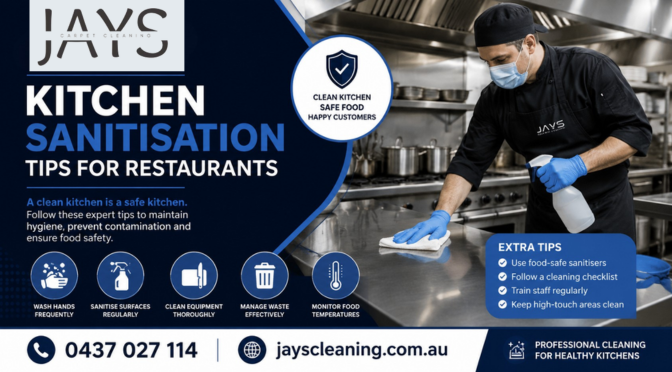
Effective cleaning strategies prevent cross-contamination and foodborne illness outbreaks:
- Wash your hands thoroughly before handling food items
- Clean cutting boards after preparing raw meat products
- Sanitise food preparation surfaces using approved chemical solutions
- Clean utensils, knives, and equipment immediately after use
- Maintain proper temperature control in refrigeration units
- Dispose of expired ingredients and perishable items safely
Restaurant Cleaning Checklist for Australian Businesses
Restaurant deep cleaning in Brisbane requires systematic approaches to all areas:
- Inspect floors, walls, and ceilings for grease buildup
- Clean inside refrigerators and freezers thoroughly weekly
- Sanitise sinks, taps, and drainage systems regularly
- Check and clean ventilation hoods and filters
- Wash kitchen towels and cloths in hot water
- Remove pest control hazards and seal entry points
- Test water temperature for proper sanitisation effectiveness
Focus Areas for Preventing Cross-Contamination
Restaurant sanitisation in Ipswich demands professional attention to specific zones. Raw meat storage must remain completely separate from ready-to-eat foods. Store poultry below vegetables to prevent contamination from dripping. Use colour-coded utensils for different food preparation tasks. Implement separate chopping boards for meats, vegetables, and bread. Train staff about hand hygiene protocols during shifts.
Role of Commercial Cleaning Services
Commercial restaurant cleaners in Logan provide professional deep-cleaning expertise. These specialists use industrial-grade sanitising equipment and approved chemicals. Professional cleaning addresses areas staff often miss or overlook. Regular professional services maintain health department compliance standards effectively. Trained professionals understand advanced cleaning techniques and industry best practices.
Staff Training and Hygiene Culture
Restaurants must invest in comprehensive staff training programmes consistently. Employees need education about proper sanitation methods and protocols. Regular refresher courses ensure knowledge stays current and effective. Creating a hygiene-focused workplace culture prevents contamination incidents. Supervisors should monitor compliance and address unsafe practices immediately.
Conclusion
Kitchen sanitisation prevents serious health risks and protects your business reputation. Implementing proper cleaning procedures protects customers and ensures regulatory compliance always. Professional assistance guarantees thorough sanitation using industry-approved methods and standards.
For expert restaurant hygiene and sanitisation services, contact Jays Carpet Cleaning today. Our experienced team provides comprehensive cleaning solutions for commercial kitchens. Ensure your restaurant meets health standards with our professional services.
Call us on 0437 027 114 or email jayscarpet96@gmail.com now. Visit https://jayscleaning.com.au/ for detailed service information. Protect your customers and business with professional sanitisation solutions today!
FAQs
- What are the main causes of foodborne illness in restaurants?
Poor hygiene, cross-contamination, and improper food storage cause most cases. Raw meat contact with ready-to-eat foods spreads dangerous bacteria quickly. - How often should commercial kitchens undergo deep cleaning?
Weekly deep cleaning is recommended for all commercial food preparation areas. High-traffic zones may require more frequent intensive sanitisation sessions. - What temperature kills harmful bacteria during sanitisation?
Hot water at 77-82°C effectively kills most bacteria and pathogens. Chemical sanitisers also work when used according to the manufacturer’s instructions precisely. - Which kitchen areas require the most frequent sanitisation?
Cutting boards, utensils, and food preparation surfaces need constant attention. Refrigeration units, sinks, and drainage systems require weekly thorough cleaning. - Are professional cleaning services necessary for restaurants?
Professional services ensure thorough cleaning using specialised equipment and techniques. They address difficult-to-reach areas that regular staff cleaning might miss entirely. - What qualifications should commercial cleaners possess? Cleaners should have food safety certifications and industry-specific training. They must understand health department regulations and approved sanitising chemicals.
- How can restaurants prevent pest infestations through cleaning?
Remove food debris, seal entry points, and maintain clean storage areas. Regular professional pest inspections help identify problems before they escalate. - What should be included in a daily kitchen sanitisation checklist?
Hand washing, surface cleaning, utensil sanitisation, and equipment maintenance matter most. Daily temperature checks and ingredient inspection ensure food safety standards. - Is colour-coded equipment necessary for food safety?
Yes, colour-coded utensils prevent cross-contamination between different food types. This system helps staff quickly identify proper use for specific items. - How often should staff receive food safety and sanitation training?
Initial training is essential, with refresher courses recommended every six months. Regular updates keep staff aware of current safety standards and regulations.